
Introduction to No Knead Ciabatta Bread
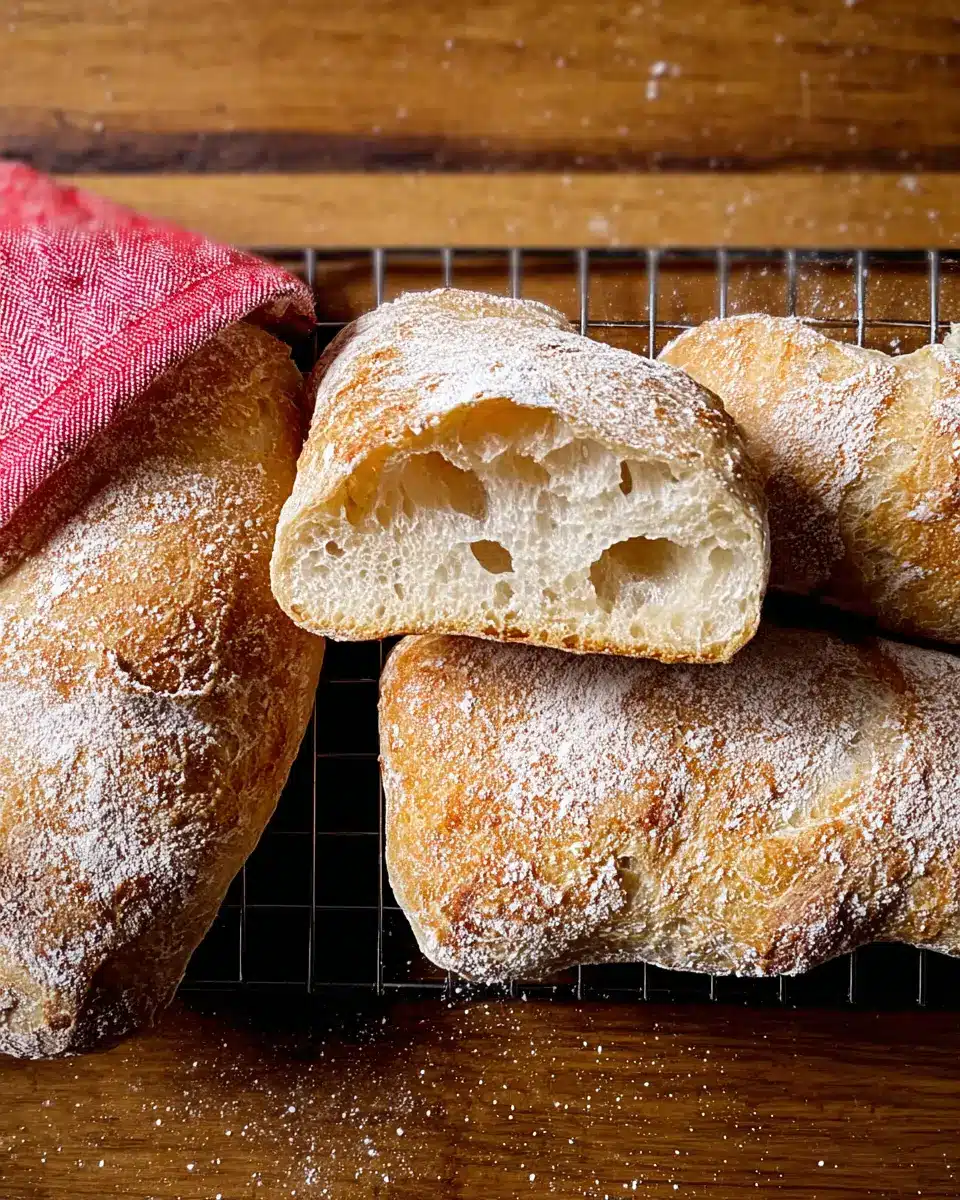
Baking no knead ciabatta bread at home is not just a culinary adventure; it’s an invitation to create something extraordinary with minimal effort. Imagine the aroma of freshly baked bread wafting through your kitchen, drawing in friends and family, eager to share in the delight. This recipe takes the traditional Italian ciabatta, renowned for its airy texture and crisp crust, and simplifies the process, making it approachable for even the busiest of home cooks.
So, why should you give this bread a try? For starters, it's an excellent way to impress your guests without spending hours in the kitchen. The no knead method allows the dough to rise slowly, developing complex flavors while requiring little more than a bowl and a spatula. Plus, fresh bread is a versatile staple—perfect for sandwiches, toast, or simply enjoying with a drizzle of olive oil.
For more insights on bread-making, you might find King Arthur Baking or Serious Eats helpful resources. Embrace your inner baker and let’s dive into this delightful recipe!
Ingredients for No Knead Ciabatta Bread
Essential ingredients for the perfect ciabatta
Creating the perfect no knead ciabatta bread involves a handful of simple yet essential ingredients. Each one plays a critical role, allowing you to achieve that delicious crusty exterior and airy interior. Here’s what you need:
- 400 g/14.10 oz 00 flour or all-purpose flour: This is the foundation of your bread. The fine texture of 00 flour provides a chewy, elastic dough that’s perfect for ciabatta.
- 1 teaspoon white sugar: Sugar helps feed the yeast, enhancing the fermentation process to create better flavor and texture.
- 1 tablespoon salt: Salt not only elevates the taste but strengthens the dough by enhancing gluten structure.
- 3 tablespoons extra virgin olive oil (EVOO): This adds richness and moisture, contributing to the overall flavor.
- 12 g/0.42 oz fresh yeast or 1 teaspoon dry yeast: Yeast is essential for leavening, giving your bread that remarkable rise.
- 300 ml/1 ⅓ cups lukewarm water: Acting as the hydrating agent, water activates the flour and yeast, creating a cohesive dough.
The role of each ingredient in the recipe
Each ingredient in this no knead ciabatta bread recipe is non-negotiable for achieving the right texture and flavor. The 00 flour or all-purpose flour provides the necessary gluten structure, while sugar and salt balance the fermentation process. The EVOO makes the bread delightful and moist, while yeast brings it to life, allowing it to rise perfectly. Lastly, the lukewarm water ensures yeast activation, helping you create that airy, open crumb we all adore in ciabatta.
As you gather these ingredients, remember that their quality matters! Using high-quality flour and fresh yeast can make a world of difference in your bread-baking journey. Ready to get started? Let’s make some magic! Check out this guide on baking with yeast for some extra tips to consider.
Step-by-step Preparation for No Knead Ciabatta Bread
Gather your equipment
Before diving into making your delicious no knead ciabatta bread, it’s crucial to organize your workspace. Gather the following items:
- A large mixing bowl
- A spatula or fork for mixing
- A chopping board or a clean work surface
- A flat baking tray lined with baking paper
Having everything at hand makes the whole process more enjoyable and efficient. Plus, it prevents those annoying last-minute scrambles!
Mixing the flour and yeast
Start the process by measuring out about 400 grams (14.10 ounces) of 00 flour or all-purpose flour. In your mixing bowl, add roughly 10% of the flour (about 40 grams) along with 300 ml (1 ⅓ cups) of lukewarm water. This temperature activates the yeast, making the dough fluffy and airy. If you're using fresh yeast, break it up with your hands before mixing it into the flour and water using a fork or spatula.
Adding the remaining ingredients
Once your flour and yeast mixture is smooth, it's time to enhance those flavors. Gradually incorporate 2 tablespoons of extra virgin olive oil (EVOO), 1 teaspoon of sugar, and 1 tablespoon of salt. Mix thoroughly to ensure all ingredients are well combined. As you adapt the texture, retain the same relaxed vibe – this bread avoids the kneading fuss!
Letting the dough rise
Now comes the magic moment: rise time! Cover your bowl with plastic wrap and place it in a warm, turned-off oven. Let the dough rise for approximately 2 hours. This is crucial, as it enhances the flavor and creates those beautiful air pockets inside your ciabatta.
Shaping the ciabatta
Once your dough has doubled in size, sprinkle a generous amount of flour on your clean work surface, then carefully transfer the dough onto it. Pour some EVOO onto the dough and gently fold in each side one at a time with a spatula. This folding technique develops the structure without the need for traditional kneading. Using a pastry cutter, divide the dough into 4-6 portions based on how big you want your rolls.
Prepping the oven
While your dough is taking shape, preheat your oven to 230°C (446°F). For that coveted crispiness, fill a cake pan with water and place it at the bottom of the oven. This steam creates a cozy environment for your ciabatta, keeping it moist while baking.
Baking the ciabatta
Carefully place your shaped ciabatta rolls on the prepared baking tray. Bake for 20 minutes, then remove the water pan and bake for an additional 5 minutes. This step is key for that perfectly crispy crust! Your kitchen will be filled with an irresistible aroma.
Now you’re ready to enjoy your homemade no knead ciabatta bread – light, airy, and perfect for any meal! There's nothing like the satisfaction of baking your own bread. Happy baking!
Variations on No Knead Ciabatta Bread
Herb-infused ciabatta
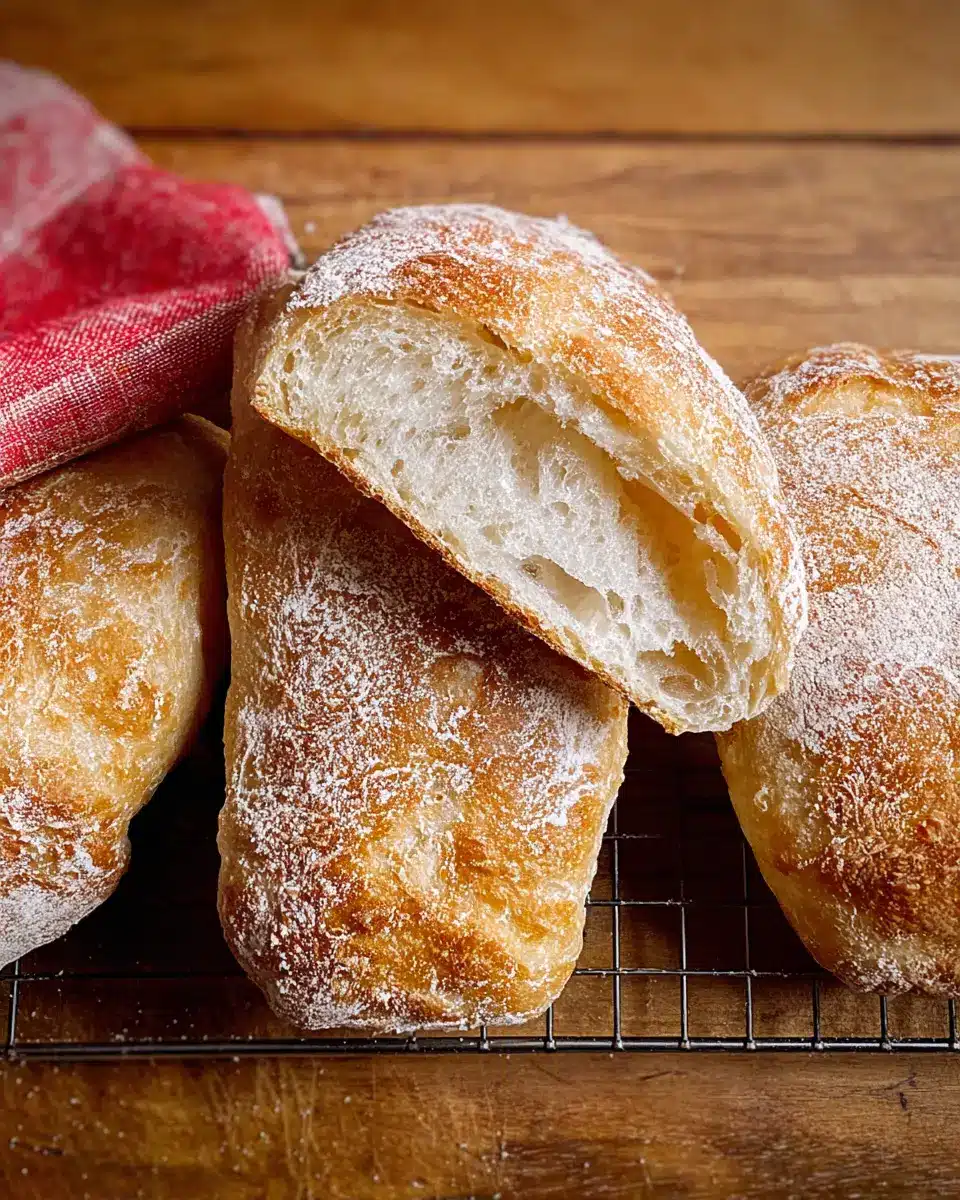
Elevate your no knead ciabatta bread by infusing it with fresh herbs like rosemary, thyme, or basil. Simply chop a handful of your favorite herbs and fold them into the dough during the mixing phase. The aroma wafting through your kitchen will be irresistible, and the flavors will take your bread to the next level. You can also explore other herbs, such as oregano or sage, for unique twists.
Olive and sun-dried tomato ciabatta
Add a Mediterranean flair to your no knead ciabatta bread by incorporating chopped olives and sun-dried tomatoes. These flavorful additions create a delightful contrast to the soft, airy bread. Mix about a cup of finely chopped olives and sun-dried tomatoes into your dough before the final rise. The result? A ciabatta that’s perfect for sandwiches or just dunking in a little olive oil! Feel free to get creative with your favorite add-ins; after all, the possibilities are endless.
Cooking Tips and Notes for No Knead Ciabatta Bread
Common pitfalls to avoid
When making no knead ciabatta bread, it’s easy to make mistakes. Be sure to:
- Measure accurately: Too much or too little flour can lead to consistency issues.
- Mind the yeast: Fresh yeast should be crumbly and active; avoid using expired yeast.
- Avoid rushing: The dough benefits from a full 2-hour rise for optimal texture.
- Flour your hands: This prevents sticking when handling the dough.
Insights from experienced bakers
Experienced bakers recommend:
- Experimenting: Don’t hesitate to adjust hydration for a crunchier crust.
- Using high-quality flour: A good 00 flour makes a noticeable difference in flavor and texture.
- Patience is key: The longer you let it rise, the better the bread! For more tips, check out resources like King Arthur Baking’s bread guide.
Embrace these tips, and you’ll be well on your way to mastering no knead ciabatta bread!
Serving Suggestions for No Knead Ciabatta Bread
Ideal pairings for your fragrant ciabatta
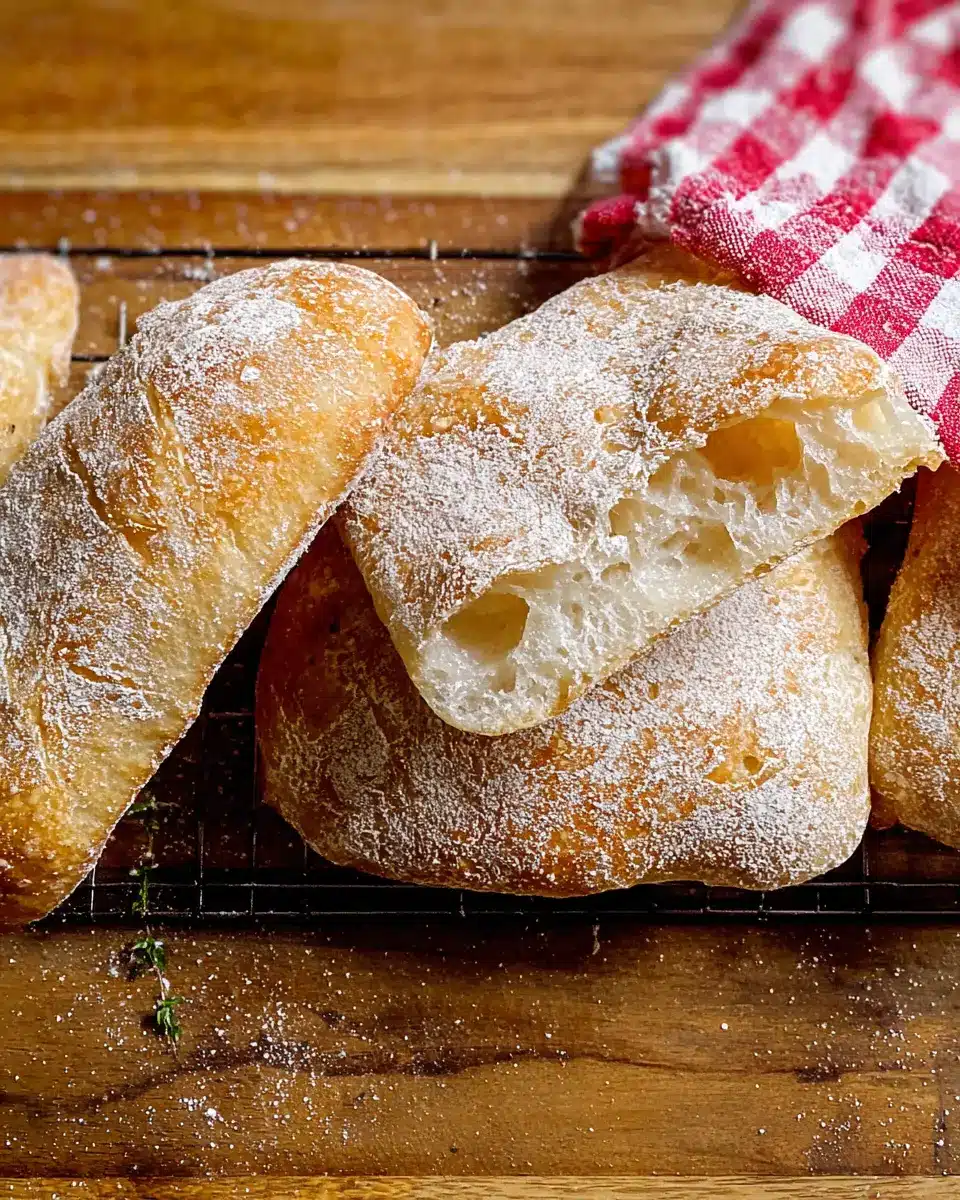
There’s something truly special about the texture and flavor of no knead ciabatta bread. It’s perfect for pairing with various toppings and sides. Consider these delightful combinations:
- Olive oil and balsamic vinegar: A classic choice, just drizzle some good quality extra virgin olive oil and a splash of balsamic for a simple yet sophisticated dip.
- Bruschetta: Top your ciabatta with fresh tomatoes, basil, and a sprinkle of salt for a delightful appetizer.
- Turkey bacon or chicken ham: Create a scrumptious sandwich with your favorite meats and some crunchy veggies.
Unique ways to enjoy ciabatta in meals
Think outside the box when it comes to enjoying your ciabatta! Try these creative ideas for a delicious twist:
- Paninis: Use your ciabatta as the base for a warm, pressed sandwich filled with cheese, turkey bacon, or even grilled vegetables.
- Ciabatta croutons: Cut leftover ciabatta into cubes, toss with olive oil, garlic, and herbs, then bake until golden—perfect for salads or soups.
- Breakfast toasts: Top slices with avocado, a poached egg, and a sprinkle of chili flakes for a nutritious breakfast.
With your no knead ciabatta bread, the possibilities are endless! What’s your favorite way to enjoy this Italian delight?
Time Breakdown for No Knead Ciabatta Bread
When it comes to making no knead ciabatta bread, understanding the time involved can make all the difference. Here’s a quick rundown to help you plan your baking adventure!
Preparation Time
Getting everything ready takes just about 5 minutes. You’ll mix the ingredients and set aside the dough to rise.
Rising Time
The dough needs to rest for 2 hours. This is when the magic happens, allowing the yeast to work its wonders! Make sure to keep it in a warm place, like your oven turned off.
Baking Time
It takes about 20 to 25 minutes to bake your ciabatta rolls to golden perfection. Keep an eye on them, as ovens can vary!
Total Time
Overall, you’re looking at around 2 hours and 30 minutes from start to finish. This includes the rising and baking time, making it a fun and manageable kitchen project.
For more delicious bread recipes, check out King Arthur Baking or Breadtopia for tips and tricks to perfect your baking skills!
Nutritional Facts for No Knead Ciabatta Bread
Calories per serving
Each serving of homemade no knead ciabatta bread contains approximately 150 calories. This makes it a guilt-free indulgence when enjoyed as a snack or part of a meal.
Carbohydrates
This delightful bread packs in about 31 grams of carbohydrates per serving. It’s perfect for those who need an energy boost, like after a workout or during a busy workday.
Protein
With around 4 grams of protein per serving, this ciabatta offers a modest amount of protein, making it a satisfying addition to salads or sandwiches. For a more protein-rich experience, consider pairing it with turkey bacon or chicken ham for a delicious twist!
For more insights on nutrition, check out sources like Healthline and NutritionData. Enjoy your baking!
FAQs about No Knead Ciabatta Bread
Can I use different types of flour for ciabatta?
Absolutely! While 00 flour is the traditional choice for making no knead ciabatta bread due to its fine texture, you can easily substitute it with all-purpose flour. Just keep in mind that the texture may vary slightly. If you’re feeling adventurous, try experimenting with whole wheat or bread flour for a different flavor profile!
What should I do if my dough is too sticky?
Don’t worry—sticky dough is part of the no-knead magic! If you find it particularly difficult to handle, sprinkle a little extra flour on your hands and the work surface. Make sure to gently fold the dough rather than knead it. Remember, a little stickiness contributes to that beautiful ciabatta crust!
How can I store leftover ciabatta bread?
To preserve your leftover no knead ciabatta bread, first let it cool completely. Wrap it in a clean kitchen towel or place it in a paper bag to maintain its crustiness. For longer storage, keep it in an airtight container and pop it in the freezer. Just thaw and reheat, and it will be as delightful as the first day!
Conclusion on No Knead Ciabatta Bread
In summary, making no knead ciabatta bread at home is a rewarding experience that yields delightful results. Enjoy the benefits of baking fresh bread with minimal effort—perfect for busy lifestyles. Don’t hesitate to experiment with flavors and shapes; your kitchen is your canvas. Happy baking!
No Knead Ciabatta Bread
Equipment
- Spatula or Fork
- large mixing bowl
- Chopping board
- Flat baking tray lined with baking paper
Ingredients
- 400 g 00 flour or All-purpose flour Plus extra on the side
- 1 teaspoon white sugar
- 1 tablespoon salt
- 3 tablespoons EVOO
- 12 g fresh yeast or dry yeast 1 teaspoon dry yeast
- 300 ml lukewarm water Plus small bowl with water for your hands
Instructions
- No-knead ciabatta bread dough always starts with the flour! Add 10% of your flour (approx. 40g) into a bowl along with the warm water.
- Next, dissolve the yeast into the mix, breaking it down with your hands then using a fork or spatula to combine.
- Once the flour, water and yeast are well mixed, add 2 x tablespoons of extra virgin olive oil, then the sugar plus salt and mix through.
- When the ingredients have combined well, slowly add the flour, just 10-20% more at a time, mixing it as you go to make sure the flour is absorbed into the wet mixture.
- Once there is no dry flour in sight, cover the bowl of ciabatta bread dough with plastic wrap and place it in the oven (turned off) for 2 hours.
- After 2 hours, remove the bowl from the oven, take off the wrap and put a generous amount of flour on your board, before placing the dough on top.
- Drizzle a generous amount of EVOO on top of the dough, spreading it all over before using the spatula to fold in each side of the bread, one section at a time (some of the flour should now be stuck to most of the dough).
- Now, add even more flour to the ciabatta dough, spreading it all over.
- Cut the loaf into 4-6 portions using a pastry cutter, according to how big you want the ciabatta rolls and gently lift each one (with a hand on either end) and place it on the tray.
- Pre-heat the oven to 230°C/446°F, fill a cake pan with water and place it in the bottom of your oven to help keep the ciabatta bread from drying out.
- Place the ciabatta rolls in the oven for 20 minutes before removing the tray of water and cooking for an additional 5 minutes to create the perfect crispness!
- E ora si mangia, Vincenzo’s Plate….Enjoy!


Leave a Reply