
Introduction to Roasted Root Vegetables
Why Roasted Root Vegetables Are a Game Changer for Young Professionals
Roasted root vegetables are not just a side dish; they are a transformative culinary experience perfect for busy young professionals. Imagine coming home after a long day, and instead of settling for takeout, you whip up a vibrant tray of beets, carrots, parsnips, and sweet potatoes. Not only are these roasted root vegetables nutritious, rich in vitamins and minerals, but they also capture the heartwarming essence of comfort food.
One of the significant benefits of incorporating roasted root vegetables into your meals is their versatility. You can easily tailor them to suit any season or occasion, making them an excellent addition to both weeknight dinners and holiday feasts. Plus, their unique flavors meld beautifully in the oven, creating a delectable caramelization that enhances their natural sweetness. According to experts, seasonal eating not only supports local agriculture but also contributes to a more balanced diet.
With minimal prep and just 45 minutes in the oven, you can enjoy a delicious, homemade dish that feels special yet requires little effort. So why not elevate your on-the-go lifestyle with this flavorful, easy-to-make recipe? Your taste buds—and your wallet—will thank you!
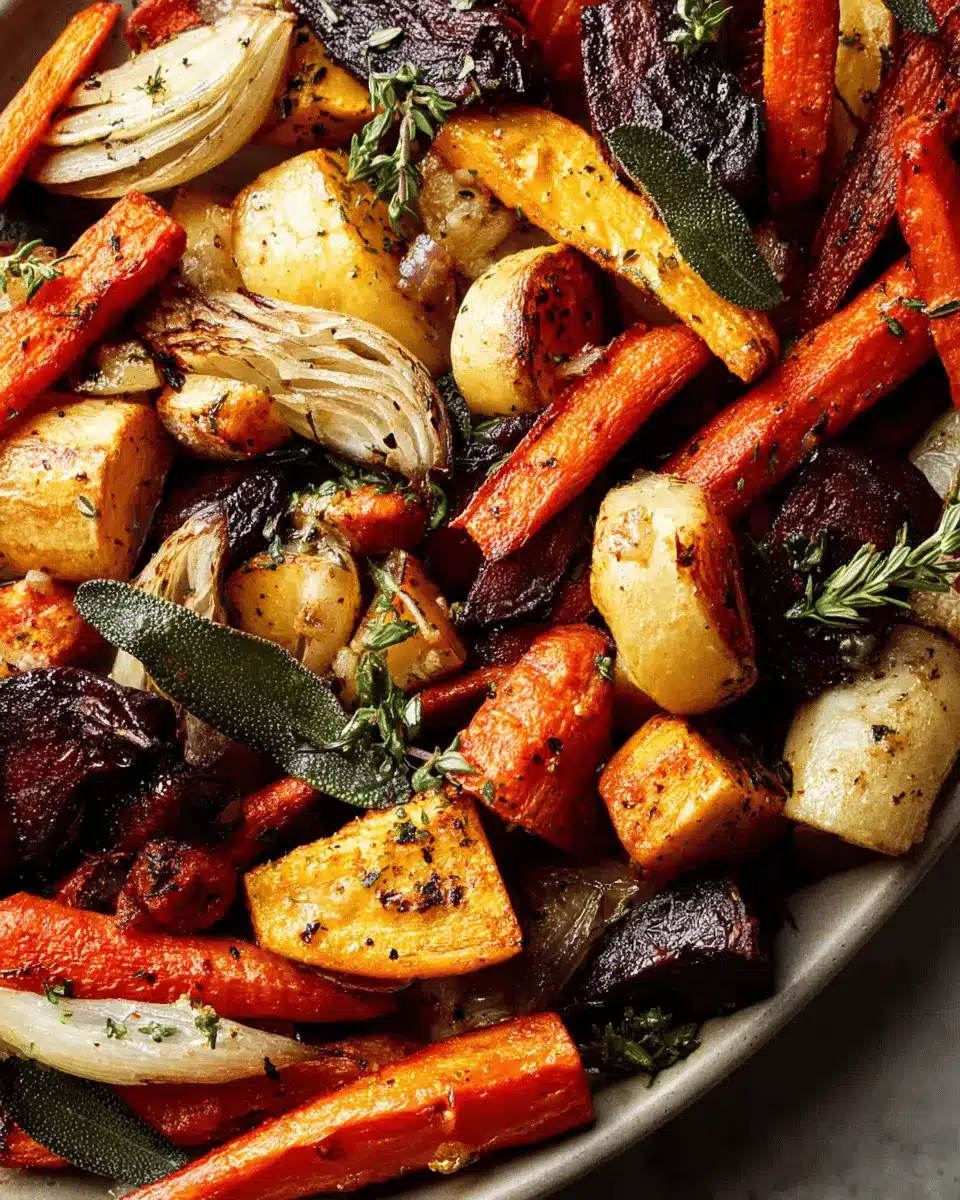
Ingredients for Roasted Root Vegetables
Essential Ingredients You'll Need
To whip up these delightful roasted root vegetables, you'll need a selection of hearty ingredients that come alive in the oven. Here’s what you should grab:
- 2 beets (preferably one red and one golden), peeled and chopped into 1-inch chunks
- 1 large carrot, roll cut into 1-inch chunks
- 3 parsnips, chopped into 1-inch pieces
- 1 medium sweet potato, chopped into 1-inch chunks
- 1 turnip, chopped into 1-inch chunks
- Extra-virgin olive oil for drizzling
- 1 tablespoon chopped fresh rosemary
- 1 tablespoon chopped fresh sage leaves
- 1 tablespoon fresh thyme leaves
- Sea salt and freshly ground black pepper
These ingredients combine beautifully, creating a medley of flavors and textures that make for a satisfying dish.
Optional Add-Ins for Extra Flavor
Looking to elevate your roasted root vegetables even further? Consider adding these optional ingredients for a twist:
- Garlic cloves: Roasted garlic brings an irresistible flavor that complements the sweetness of the veggies.
- Red onion: Adding chopped red onion gives a savory depth and a pop of color.
- Spices: A sprinkle of smoked paprika or cumin adds a warm, earthy flavor that enhances the roasted charm.
By mixing in any of these extras, you can create a unique version that fits your palate. For more ideas, check out popular seasoning blogs like Spiceography or Serious Eats for inspiration!
Step-by-Step Preparation of Roasted Root Vegetables
Gather and Prep Your Ingredients
The first step in crafting these roasted root vegetables is to gather all your ingredients. You'll need a colorful array of root veggies: 2 beets (try using a red and a golden beet for variety), 1 large carrot, 3 parsnips, 1 medium sweet potato, and 1 turnip. All of these should be peeled and chopped into 1-inch chunks, which helps with even cooking!
Don’t forget your herbs: fresh rosemary, sage, and thyme will bring a wonderful aroma and flavor to your dish. A sprinkle of sea salt and freshly ground black pepper will round out the flavors. For that finishing touch, you’ll want some extra-virgin olive oil.
Preheat and Prepare Your Baking Sheets
Next up, preheat your oven to 425°F. This high temperature is key for achieving that delicious caramelization we all love. While the oven is heating, take two baking sheets and line them with parchment paper. This not only makes for easier cleanup but also helps prevent sticking, ensuring your vegetables roast perfectly.
Toss and Season the Vegetables
Once your veggies are prepped and your oven is hot, it’s time to toss everything together! Divide the beets and carrots on one baking sheet and the parsnips, sweet potato, and turnip on the other. Drizzle them generously with olive oil, and then sprinkle with your chopped herbs, a good pinch of salt, and several grinds of pepper.
Toss the vegetables until they are evenly coated; this is where the magic happens! Spread them into a single layer on the baking sheets—this promotes even roasting.
Roast Until Tender
The fun part—into the oven they go! Roast your roasted root vegetables for 25 to 50 minutes, depending on their type. The beets and carrots will take longer to reach tenderness, while the parsnips and sweet potatoes may be ready sooner. Keep an eye on them and give them a good stir halfway through to ensure they roast evenly.
Make the Crispy Sage and Sage Oil
While your veggies are roasting, why not elevate your dish further with some crispy sage? In a small saucepan, heat 2 tablespoons of olive oil until bubbling. Add around ten fresh sage leaves and stir briefly until they become crispy—this should only take about a minute. Once finished, transfer the leaves to a paper towel-lined plate to drain, reserving the fragrant oil for drizzling over your finished dish.
Assemble and Enjoy!
After removing the roasted vegetables from the oven, toss them with a tablespoon of your sage oil for that extra burst of flavor. Serve them on a platter and sprinkle the crispy sage leaves on top. These roasted root vegetables make for an eye-catching and delicious side dish, perfect for gatherings or a cozy family meal. So, get ready to enjoy a warm, flavorful dish that brings the essence of fall and winter right to your table!
Explore more about root vegetables and their benefits here and learn unique ways to season them here. Happy cooking!
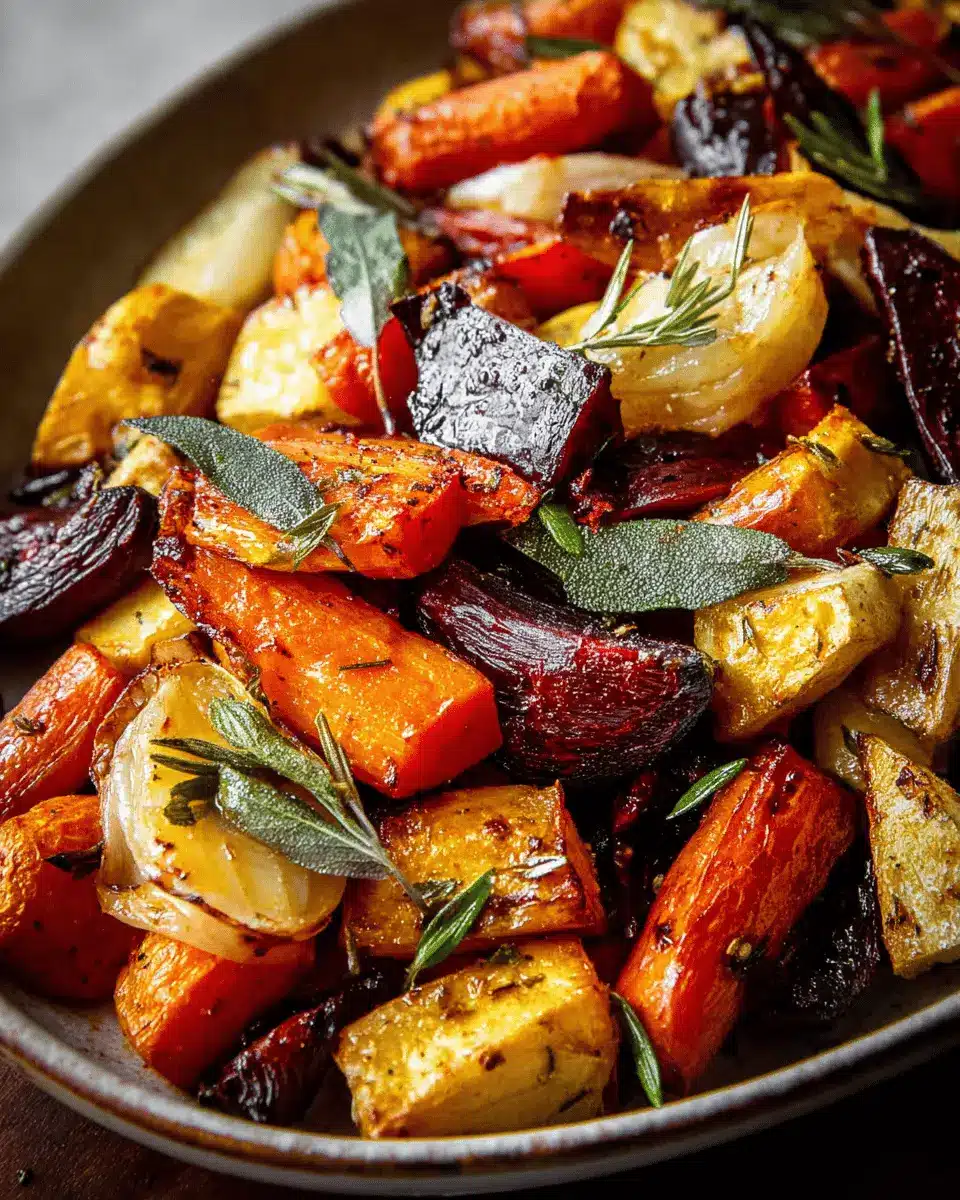
Variations for Roasted Root Vegetables
Seasonal Variations to Try
Making roasted root vegetables is all about celebrating what's in season. In spring, add vibrant radishes and baby carrots for a fresh twist. Summer brings the perfect opportunity to include zucchini and sweet corn. As winter settles in, consider hearty roots like parsnips and celery root, which caramelize beautifully. You can even experiment with different beets, such as Chioggia for a stunning visual contrast. Check out seasonal produce calendars for inspiration on what to incorporate!
Different Spice Combinations for Unique Flavors
Elevate your roasted root vegetables with exciting spice combinations! Consider using:
- Cumin and coriander for a warm, earthy flavor.
- Cinnamon and nutmeg for a hint of sweetness.
- Smoked paprika and garlic powder for a robust, savory punch.
Don’t shy away from adding a splash of citrus zest or a drizzle of maple syrup to add depth and character. Experiment with herbs like dill or basil for unexpected freshness. Your taste buds will thank you for the adventure!
Cooking Tips and Notes for Roasted Root Vegetables
Why Uniform Sizes Matter
When preparing roasted root vegetables, aiming for uniform sizes is crucial. This ensures even cooking: smaller pieces will roast faster, while larger ones might remain firm. Cutting each vegetable into 1-inch chunks, as we recommend in the recipe, allows them to develop a beautifully caramelized exterior while maintaining a tender interior. Not only does this help with cooking times, but it also gives a lovely, consistent presentation on the plate.
Tips for Achieving Perfect Caramelization
To achieve that irresistible caramelization, consider these tips:
- Use high heat: Roasting at 425°F (as in our recipe) maximizes browning.
- Don’t overcrowd the pan: Give your veggies space to breathe; this helps them roast rather than steam.
- Toss with oil and herbs generously: A good drizzle of extra-virgin olive oil allows for better browning and flavor absorption.
For more in-depth tips on vegetable roasting, check out America's Test Kitchen and elevate your roasted root vegetables to new heights.
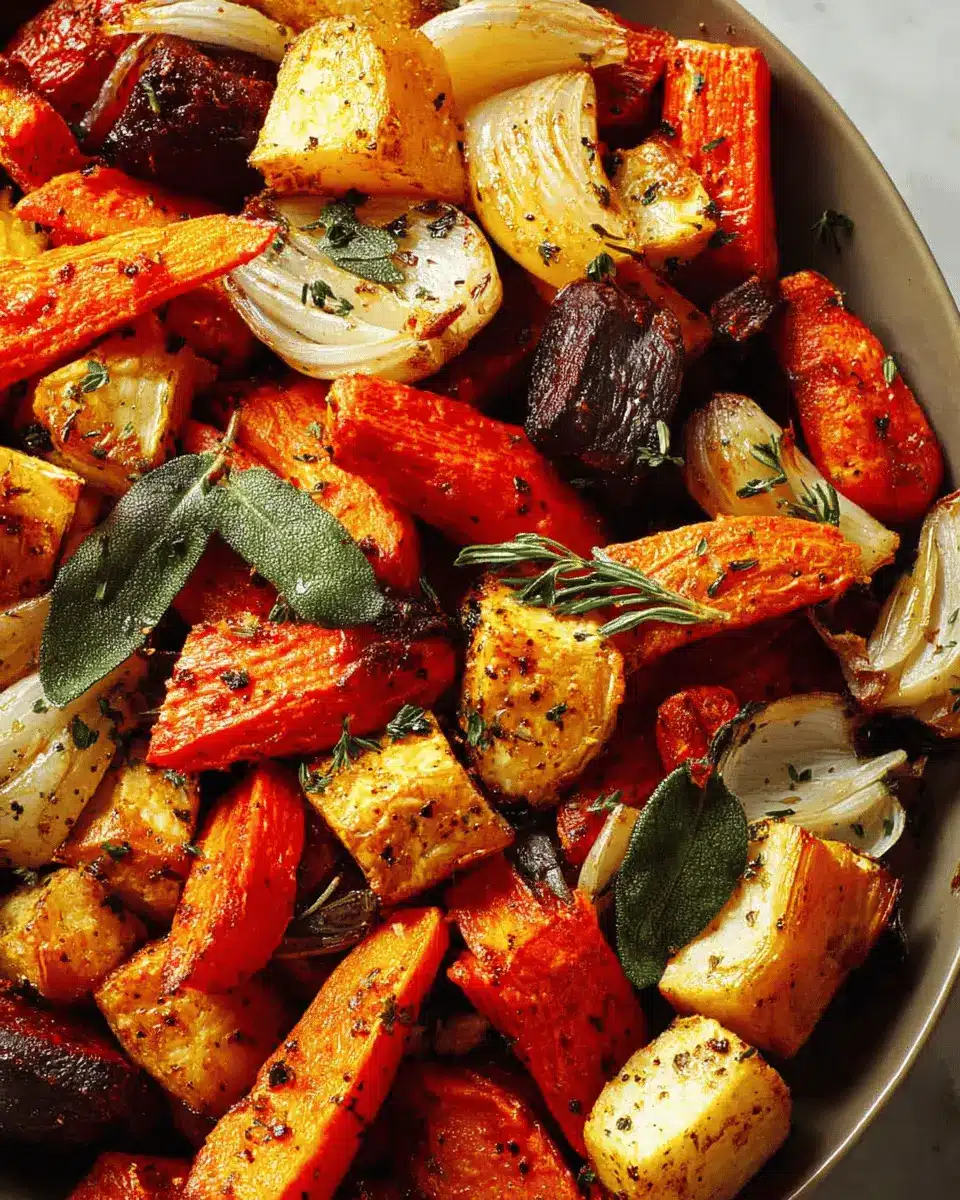
Serving Suggestions for Roasted Root Vegetables
Pairing with Your Favorite Proteins
Roasted root vegetables are incredibly versatile and can complement a variety of proteins. Consider serving them alongside roasted chicken breast or grilled turkey bacon for a hearty, satisfying meal. For a plant-based option, pair them with quinoa or a chickpea salad to keep things light yet nourishing. The earthy flavors of these veggies create a beautiful balance with savory meats and legumes, enhancing the overall dish.
Creative Plating Ideas for Gatherings
When hosting a dinner party, presentation matters! Serve your roasted root vegetables on a rustic wooden board or in a colorful ceramic bowl for a touch of charm. Drizzle with the fragrant sage oil and sprinkle crispy sage leaves on top to elevate the dish visually and flavor-wise. You could even spice things up with some pomegranate seeds or crumbled feta for a pop of color and taste. These small touches will impress your guests and elevate your dining experience. For more ideas, check out this entertaining guide for inspiration!
Time Breakdown for Roasted Root Vegetables
Preparation Time
Getting your vegetables ready doesn't take long—just about 15 minutes. You'll peel and chop the beets, carrots, parsnips, sweet potato, and turnip into bite-sized pieces, making them perfect for roasting. This quick prep will give you more time to enjoy your dish!
Cooking Time
Once your veggies are prepped, they’ll roast in the oven for approximately 45 minutes. This slow cooking allows the vegetables to caramelize beautifully, enhancing their natural sweetness. For perfectly cooked roasted root vegetables, keep an eye on them and check for that delicious golden-brown finish!
Total Time
In just about 1 hour, you can have a delightful side dish ready to complement any meal. Whether you’re serving it at a holiday gathering or a cozy weeknight dinner, these roasted root vegetables will surely impress.
For additional tips on roasting techniques, check out resources from Serious Eats and The Kitchn for even more culinary inspiration.
Nutritional Facts for Roasted Root Vegetables
Calories
Roasted root vegetables are not only delicious but also a low-calorie option. A serving typically holds around 150 calories, making it a guilt-free addition to your meals. This satisfying side dish lets you indulge without overloading on calories.
Fiber Content
These hearty vegetables are a fantastic source of dietary fiber, containing about 5 grams per serving. Fiber maintains digestive health and keeps you feeling full longer. Including more fiber in your diet can support weight management and heart health, making these veggies a smart choice.
Essential Vitamins and Minerals
Roasted root vegetables pack a nutritious punch! Rich in vitamins A and C, they support immune function and promote healthy skin. They also contain essential minerals like potassium and magnesium, which are crucial for heart health and muscle function. For an in-depth look at the benefits of vitamin-rich foods, consider visiting Healthline.
These roasted root vegetables not only enhance your dinner plate aesthetically but also provide a nourishing boost to your overall health—perfect for a cozy fall or winter meal. So why not savor the goodness in your next culinary adventure?
FAQ about Roasted Root Vegetables
How Can I Make My Roasted Veggies Even Crispier?
To achieve beautifully crispy roasted root vegetables, ensure they're patted dry before tossing them in oil. Spacing them out on the baking sheet can also help—they shouldn’t be crowded! Adding a light sprinkle of cornstarch before roasting can create an extra crunch, or simply roasting at a higher temperature will promote browning. Always remember to flip them halfway through cooking for even crispiness.
Can I Prepare Them in Advance?
Absolutely! You can chop your veggies up to 24 hours in advance and store them in an airtight container in the refrigerator. Toss them with olive oil and herbs right before roasting for optimal flavor and freshness. Need more tips on meal prep? Check out this handy guide.
What Other Vegetables Can I Use in This Recipe?
Feel free to mix it up! Roasted root vegetables include a variety of options, such as potatoes, rutabaga, or even celery root. Carrots, radishes, and parsnips can also add great flavor and texture. Just remember to cut them into even sizes for uniform cooking. Experimenting with colors and flavors can bring a delightful twist to your dish!
Conclusion on Roasted Root Vegetables
In summary, roasted root vegetables are versatile, flavorful, and an excellent addition to any meal. Their natural sweetness and caramelization make them a favorite, especially in fall and winter. With simple prep and cooking steps, you can delight your guests or family with this crowd-pleaser. Enjoy!

Roasted Root Vegetables
Equipment
- oven
- baking sheets
- parchment paper
- small saucepan
- Plate
Ingredients
Root Vegetables
- 2 beets beets, preferably 1 red and 1 golden, peeled and chopped into 1-inch chunks
- 1 large carrot, roll cut into 1-inch chunks
- 3 parsnips parsnips, chopped into 1-inch chunks
- 1 medium sweet potato, chopped into 1-inch chunks
- 1 turnip turnip, chopped into 1-inch chunks
- extra-virgin olive oil, for drizzling
- 1 tablespoon chopped fresh rosemary
- 1 tablespoon chopped fresh sage leaves
- 1 tablespoon fresh thyme leaves
- sea salt and freshly ground black pepper
Crispy Sage and Sage Oil
- 2 tablespoons extra-virgin olive oil
- 10 leaves fresh sage leaves
Instructions
Preparing the Vegetables
- Preheat the oven to 425°F and line two baking sheets with parchment paper.
- Place the beets and carrots on one baking sheet and the parsnips, sweet potato, and turnip on the other. Drizzle the vegetables with olive oil and sprinkle with the rosemary, sage, thyme, pinches of salt, and several grinds of pepper. Toss to coat and spread evenly on the baking sheets. Roast for 25 to 50 minutes, or until tender and browned around the edges. The parsnips, sweet potato, and turnip will bake for less time. The beet and carrot will roast longer.
Making the Crispy Sage
- Make the crispy sage: Line a plate with paper towels. Heat the olive oil in a small saucepan until bubbling, add the sage leaves, stir, and cook until crisp, about 1 minute. Remove the leaves from the oil and transfer to the prepared plate to drain. Reserve the oil for serving with the vegetables.
Serving
- Remove the vegetables from the oven and toss with 1 tablespoon of the sage oil. Transfer to a platter and top with the crispy sage leaves.




Leave a Reply